
If your company sells long-term licenses (such as SaaS – software as a service), a common mistake is failing to recognize revenue correctly over time. I’ve seen cases where an early-stage startup’s impressive-looking revenue growth chart collapses once revenue recognition is corrected in the accounting records.
Let’s say you sell a license to a customer in December 2024 for €12,000 (VAT 0%) covering the period from December 1, 2024, to November 30, 2025. The customer pays the full annual license fee in advance in December 2024, and your company’s fiscal year follows the calendar year.
Example of Incorrect Revenue Recognition
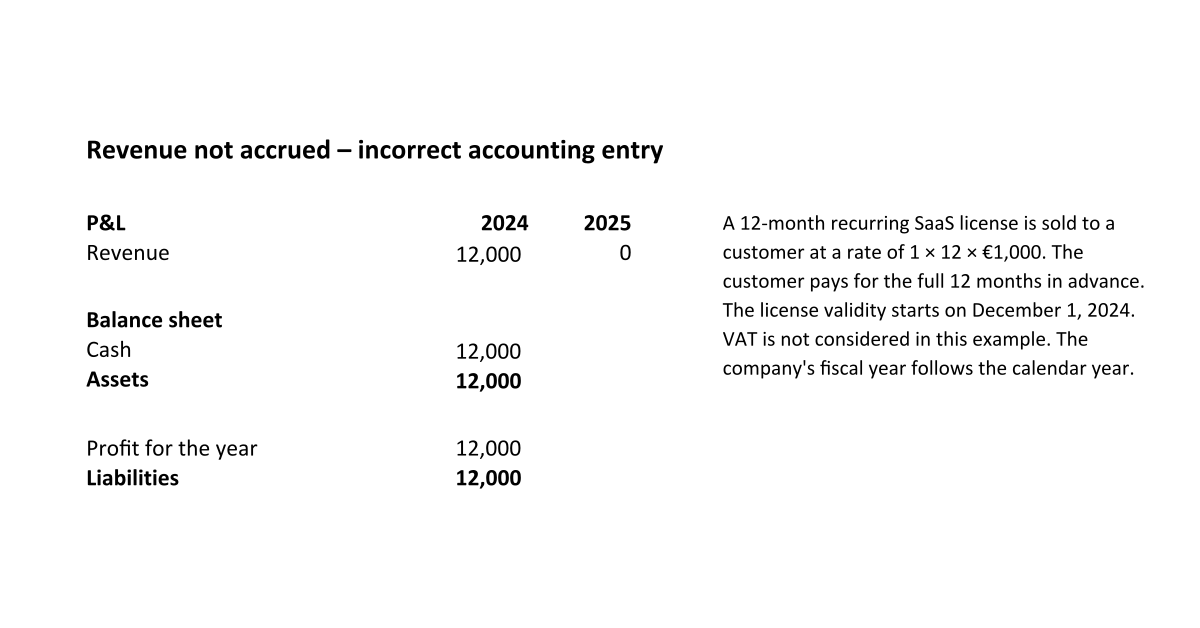
If revenue is recorded incorrectly, the entire €12,000 is recognized as sales revenue in December 2024. This means the full amount appears in the 2024 income statement, artificially inflating that year’s revenue.
Correct Revenue Recognition Approach
The correct approach is to recognize the revenue over time, allocating €1,000 per month in the income statement from December 2024 to November 2025. This way, the revenue is properly reflected in each reporting period.
One-time charges, such as onboarding fees, are not deferred. These should also not be included in MRR (Monthly Recurring Revenue) or ARR (Annual Recurring Revenue) calculations.
The accompanying illustration demonstrates how the accounting entries should be made. The upper example shows the incorrect approach, where revenue is fully recognized in 2024. The lower example presents the correct method, where revenue is recognized gradually over the subscription period.
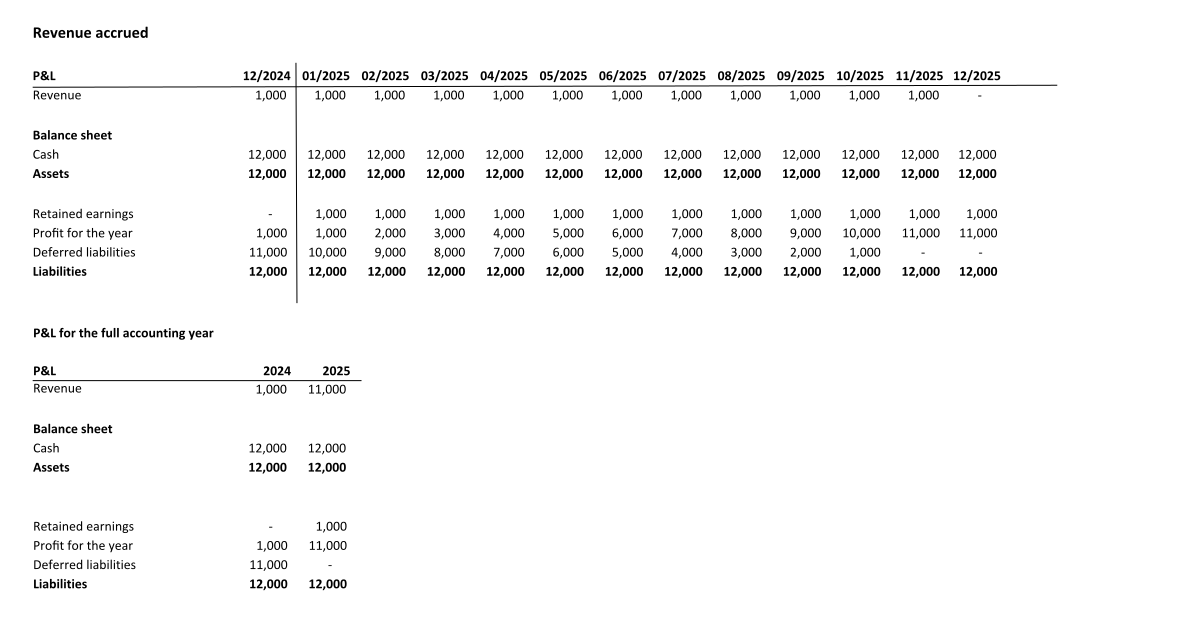
The image also illustrates how deferred revenue appears on the balance sheet. Any unrecognized revenue is recorded as a liability under deferred income, which is then gradually released into revenue over the subscription period.
Impact on Financial Reporting and Investor Confidence
Correctly recognizing revenue over time is not just an accounting technicality. It significantly impacts your financial statements and, consequently, investor confidence. Inflated revenue in one period followed by a slump in subsequent periods can raise red flags for investors. Consistent, predictable revenue recognition, on the other hand, demonstrates the stability and health of your business, making it more attractive to potential investors. It provides a clearer picture of your actual financial performance, allowing for better forecasting and strategic decision-making.
We are here to help
If you have any questions about this topic or another, please don’t hesitate to contact us via this form or at myynti[at]valjas.fi.